Finding high-quality organic baby foods that suit your little one’s tastes and developmental stage is easier with a curated list. This guide highlights five top organic baby food products that are well-suited for common feeding milestones, from first tastes to more varied textures. The selections emphasize clear ingredient lists, kid-friendly textures, and practical packaging for busy families. This overview helps caregivers choose confidently for infant and toddler nutrition while keeping meals simple and wholesome.
| Product | Why It Stands Out |
|---|---|
| Happy Baby Stage 2 Pouches | Clear packaging, stage-appropriate texture, fruit & veggie balance |
| Happy Baby Savory Blends Stage 3 | Protein plus veggies, unsalted blends for advancing tastes |
| Serenity Kids 6+ Months Pouches | Veggie-first formulas, no added sugar, on-the-go friendly |
| Happy Baby Nutty Blends Stage 2 | Nuts introduced with baby-friendly textures, allergen considerations |
| Beech-Nut Organic Jars | Simple ingredients, no artificial additives, non-GMO |
Happy Baby Stage 2 Pouches — Clearly Crafted Fruit & Veggie Puree

Best for Stage 2 eaters transitioning from single-ingredient foods. These pouches present gentle, smooth purees that blend fruits and vegetables in child-friendly flavors, with a transparent packaging approach that helps caregivers verify ingredients at a glance. The format is convenient for on-the-go feeding and ideal for babies learning to self-feed. Potential limitation: stage-appropriate flavors may vary in sweetness, so monitor your child’s preference and introduce new flavors gradually.
Happy Baby Savory Blends Stage 3 — Meats & Veggies Variety Pack

Best for older infants ready for thicker textures and protein-rich flavors. These pouches blend organic proteins with vegetables and herbs, offering more savory profiles without added salt. This selection is well-suited for toddlers who are beginning to prefer meals with a “home-cooked” feel. Limitation: some blends may be thicker; ensure your child is ready for a chunkier texture and supervise while eating.
Serenity Kids 6+ Months Pouches — Protein-Packed Veggie Puree
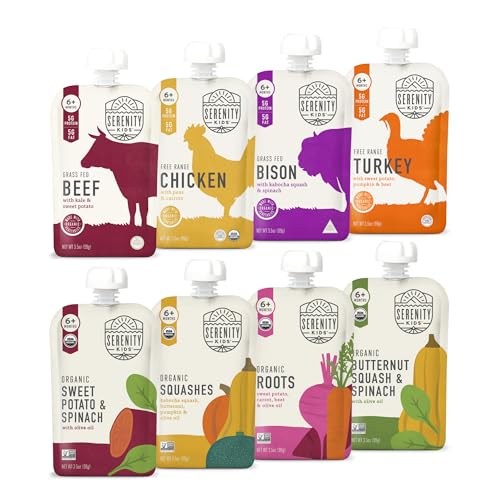
Best for travel-friendly nutrition with a veggie-first approach. Serenity Kids emphasizes real nourishment in convenient pouches suitable for toddlers on the go. The mix leans toward vegetables first, with protein support and no added sugar, aligning with growing appetites. Caution: confirm that the flavor profile aligns with your child’s taste preferences, as some may prefer sweeter options.
Happy Baby Nutty Blends Stage 2 — Fruit & Nut Butter

Best for introducing nuts in a baby-safe texture. Nutty Blends pair fruit with smooth nut butters in a baby-appropriate texture, following allergen introduction guidelines. This option supports exposure to common allergens in a controlled form and is useful for families wanting to diversify protein sources. Limitation: nut exposure should follow pediatric guidance and consider family allergy history.
Beech-Nut Organic Jars — Banana Puree (Stage 2)

Best for babies enjoying smooth, simple fruit purées with minimal ingredients. Beech-Nut emphasizes real organic ingredients, non-GMO and free from artificial additives, making it a straightforward option for early stage feeding. Better for parents who prefer jar formats for easy portioning and storage. Limitation: some stages may require careful texture management as babies progress to more textured foods.
Buying Guide
What to consider when choosing organic baby foods:
- Stage and texture: Match the product to your child’s current feeding stage (Stage 1, Stage 2, Stage 3) and readiness for thicker purées.
- Ingredient transparency: Look for clearly labeled ingredients and organic certifications, especially for allergen guidance.
- Nutritional balance: Favor products that pair vegetables with proteins when appropriate and avoid added sugars.
- Packaging and convenience: Pouches offer portability, while jars provide a familiar home-cooked texture; consider self-feeding abilities and storage needs.
- Allergen considerations: If introducing nuts or other common allergens, follow pediatric guidance and consider allergen introduction timing.
- Flavor variety: A mix of fruit-forward and savory options can support diverse tastes and reduce mealtime battles.
Frequently Asked Questions
- What does “organic” mean for baby foods?
Organic labeling indicates ingredients are grown without most synthetic pesticides or fertilizers and without genetically modified organisms, aligning with consumer preferences for natural farming.
- When should I start introducing allergens like nuts?
Follow pediatric guidance; many experts recommend early and repeated exposure to allergens under supervision, beginning around 6 months when appropriate.
- Are pouches safe for babies learning to self-feed?
Yes, pouches can be convenient for on-the-go feeding, but supervise to prevent choking and ensure the texture matches your child’s abilities.
- How do I know if a product is suitable for my baby’s stage?
Check the packaging for the stage designation (Stage 1/2/3) and align textures with your child’s feeding progress and doctor’s advice.
- Should I mix different brands or stay consistent?
Mixing is fine to expose flavors, textures, and ingredients; however, introduce new products gradually and monitor for tolerance or signs of intolerance.