When you’re shipping perishable or frozen foods, durable polystyrene boxes with liners offer reliable insulation, leak resistance, and simplicity of use. This guide highlights five top-grade options, clarifies who each product is best for, and explains how to pick the right box for your cold-chain needs. Ideal buyers include small food businesses, home bakers shipping frozen goods, and anyone who requires dependable temperature control during transit.
| Product | Box Size | Best For | Notes |
|---|---|---|---|
| CH-BOX TB7610L-4 | 6.5″ x 5.5″ x 9″ (inner), 7.1″ x 6.18″ x 10″ (outer) | Small cold shipments | 1.4 gal capacity, liner enhances insulation |
| CH-BOX TB151011L-4 | 14.375″ x 9.375″ x 10″ (inner), 15″ x 10″ x 11″ (outer) | Medium cold shipments | 5.8 gal capacity, sturdy construction |
| CH-BOX TB7610L-8 | Same as TB7610L-4 | Larger volumes | 8-pack option for bulk use |
| TFCaryi 12″ x 12″ x 12″ | 12″ x 12″ x 12″ (inner) | Reusable thermally insulated boxes | Includes insulation bags and clear safety markings |
| Gilprop 10″ boxes (2 Pack) | 10″ x 10″ x 10″ (folded) | Compact, dual-pack | Aluminum liner; durable for long transport |
CH-BOX TB7610L-4 Small Insulated Shipping Boxes

The TB7610L-4 kit includes four compact boxes with liners designed for perishable or frozen food shipments. Inner dimensions are 6.5″ x 5.5″ x 9″ with an outer size of 7.1″ x 6.18″ x 10″ after tape is applied, offering a 1.4-gallon capacity. Best for ultra-compact cold shipments, such as small batches of frozen food, breast milk, or small meat/fish portions. The liner and foam insulation retard heat transfer to preserve temperature during transit. Useful for small e-commerce shipments or local delivery services that require quick setup and reliable insulation.
Who it’s best for: small businesses or individuals shipping single-serving or tiny frozen items where size matters more than volume. Why selected: compact size minimizes packaging waste while still providing sufficient insulation for short-to-mid length deliveries. Caution: limited capacity means you’ll need multiple boxes for larger orders.
CH-BOX Insulated Shipping Boxes TB151011L-4

This set features larger insulated shipping boxes with liners, optimized for medium-sized frozen shipments. Inner dimensions are 14.375″ x 9.375″ x 10″ (outer 15″ x 10″ x 11″), offering about 5.8 gallons of capacity. The design emphasizes leakproof insulation to maintain consistent temperatures and minimize heat transfer, making it suitable for shipping frozen meals, bulk breast milk, or multi-item cold storage. Best for small food businesses expanding into moderate-volume frozen shipments. Choose this if you need a balance between capacity and robust insulation. Limitation: larger footprint may require more storage space when not in use.
CH-BOX TB7610L-8 Small Cold Boxes (8 Pack)

This 8-pack replicates the TB7610L-4’s compact size, providing the same inner and outer dimensions (6.5″ x 5.5″ x 9″ / 7.1″ x 6.18″ x 10″) but in higher quantity for bulk operations. The liners and insulated materials slow heat transfer to keep perishable items cold or hot as needed. Best for businesses that require multiple shipments in a single order or event-based deliveries. Better for higher volume needs than the 4-pack variant, but storeability is crucial to consider. Caution: bulk packaging can take up more storage space when unused.
TFCaryi 12″ x 12″ x 12″ Insulated Shipping Boxes

These 12″ x 12″ x 12″ insulated boxes come in a 4-pack with insulation bags. Notable features include clear safety markings (“PERISHABLE” and “INSULATED”) and a double-layer thermal protection system combining aluminum foil-lined interior with an inner insulation bag. Best for medium-to-large shipments needing robust temperature control and explicit handling guidance. They’re easy to assemble, and the included insulation bags add an extra layer of protection. Caution: external box markings are helpful, but ensure inner contents are well packed to avoid shifting during transit.
Gilprop 2 Pack Insulated Shipping Boxes
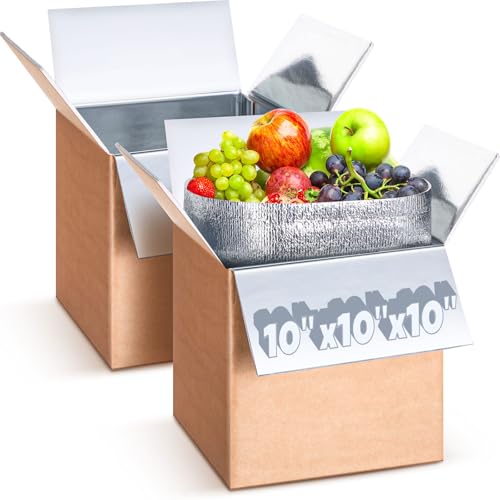
Gilprop’s two-pack set offers 1.5-gallon capacity per box, folded to 10″ x 10″ x 10″ with an aluminum liner measuring 8.6″ x 8.6″ x 11″. The design emphasizes durability to withstand impacts during transportation. Best for direct-to-consumer shipments that require reliable cold-chain performance at a compact size. Use this when you need repeated shipments of small to medium batches and want a lightweight, durable solution. Limitation: aluminum liners add cost and may require careful disposal after use.
Buying Guide: How To Choose Polystyrene Boxes For Frozen Food
What temperature range do you need to maintain?
Consider typical transit times and the minimum internal temperature you require. Short trips may tolerate lighter insulation, while longer routes benefit from thicker liners and double-layer protection.
What capacity fits your average order?
Estimate average order size in gallons or number of items. If you ship multiple items per order, larger boxes or multi-pack sets can reduce packaging complexity.
How important is ease of use and setup?
Some boxes include pre-attached liners and quick-seal designs, which speed packing. If you ship often, a system that assembles quickly minimizes handling time.
Are there handling and safety considerations?
Clear safety markings and sturdy construction help handlers keep items upright and protected. Aluminum liners can improve insulation but may be less flexible in irregular shapes.
What storage space do you have?
Polymer and foam insulation boxes require space for storage when not in use. Choose sizes that fit your workspace and order cadence to avoid clutter.
What is your budget and scale?
Smaller sets are economical for hobbyists or micro-businesses, while bulk packs reduce per-box costs for higher volume operations. Balance upfront cost with long-term packaging needs.
How do you handle returns or damaged shipments?
Durable boxes with leakproof liners help minimize spoilage during transit. Have a plan for damaged shipments and communicate bag or liner replacements to customers if necessary.
Summary of Key Differences
- Small boxes (TB7610 series) offer compact form and quick setups for low-volume orders.
- Medium boxes (TB151011) balance capacity and insulation for larger single orders.
- Boxes with added bags or reflective liners provide extra thermal protection, suited for longer trips.
- Two-pack options are convenient for two-shipment users or test runs before scaling up.
Frequently Asked Questions
- What is the main advantage of insulated shipping boxes for frozen food?
They reduce heat transfer and protect the product from temperature changes during transit. - Do these boxes require special handling by carriers?
Some models include visible safety markings to guide handling, but always consider carrier requirements for perishable items. - Can I reuse these boxes?
Reusable variants exist, especially those with robust liners and bags, but evaluate liner integrity after each use. - Which box size should I choose for my product line?
Base your choice on average order size, required temperature duration, and available storage space. - Is aluminum liner necessary?
Aluminum liners enhance temperature retention but add cost; choose based on shipment duration and contents. - Are these boxes suitable for breast milk or medical cold shipments?
Some boxes are designed for perishables and medicines; verify product specifications for medicational use.